

I was fortunate to speak with Cheryl Anthony and ask her some burning questions about teaching kids with dyslexia. Cheryl has been working in the field of education and testing for children of dyslexia for 20 years. She knows how to crack the puzzle of the dyslexic brain with her teaching and testing methods for establishing a customized reading program for kids at different levels. She is highly sought after in southern Arizona, working with schools and individuals to help kids learn to read.
What Does It take to Learn to Read?
Cheryl: Research since the 90’s has shown there are two components necessary for a student to be able to read. First, they must be able to decode words, which means associate the written letters with the appropriate sounds and then, blend those sounds into words.
Judy: We used to call this sounding out the words. Or phonics. I remember being in first grade and bored to death because my classmates could not get the simple sounds of the letters and the teacher went over and over it until I wanted to poke my eyes out. She was doing this because some kids could not learn phonics with this traditional method. I realize now, these were probably students with information processing difficulties like dyslexia or other learning differences. My classmates weren’t dumb but their brains processed information uniquely.
Cheryl: The second component to learn to read is the student must be able to understand the meaning of the words.
The Two-Pronged Approach
Cheryl uses this two-pronged approach. Before the student even reads a book, they are taught the sight words and the sounds associated with the letters that will appear in that book’s lesson.
Cheryl: So, when they pick up their first book, they have the tools to read it. It’s very exciting to see this instant success.
Judy: So how exactly do you do this?
Cheryl: First, I do an assessment to learn about the student’s sound awareness. For example, I ask can you hear all the sounds in the word cat. C c c aaa t t t. I ask the student to isolate these three sounds. Then I ask if they can blend the sounds into a word. I give them t…r….eee. And see if they can recognize the word tree. Can they hold those sounds in memory and can they blend them into a word.
Then I ask if I give them the word cat can they change the first sound in the word cat into the sound of a b. What would the word be? (ie. bat)
These are phonemes. The very smallest chunk of spoken sound.
Different Brain Wiring
Individuals with dyslexia have a different brain wiring from the typical reader. They usually only access one area of the brain, Broca’s area, the inferior frontal gyrus (articulation/word analysis area). A typical reader accesses Broca’s area and also two others: the Parieto temporal (word analysis area), the Occipito Temporal Area (word form area). Since individuals with dyslexia only have access to the one area, they must try harder than their peers while learning to read. Brain Differences
A Story of a Third Grader
Cheryl: Access to one part of the brain instead of three is a less efficient way to process— in through the eyes and out through the hands (writing). I have a third-grade boy who has dyslexia and ADHD. He is always moving and grooving. Somedays he is in his seat. He’s tried to work hard but it is not easy for him. We started working together three months ago. He is very resistant. Like he will get up and move away from the screen. Once he got on medication, he was more regulated. I could see a difference. We worked with sounds. Once the brain learns some of the skills there is actually a change in the brain wiring so a student can begin to access more areas of the brain. It takes time but the neural pathways actually change. It’s a beautiful thing, this adaptability of the human brain.
Multi-Sensory Approach in Reading
Cheryl: Learning to read is aided with a multi-sensory approach. I use colored wooden tiles placed in a row. I ask the student to say the sound “d” for dog and use one finger to pull down one tile with each sound. Ie. “d” and they pull down the red tile “o” and they pull down a blue tile. They might pull down a yellow tile for the “g” sound. Then they touch the tile and say each sound. I ask them to slowly blend the sounds into a word. If they say d—o—g I ask them to now say it fast. Dog.
This type of practice is huge. This is sound awareness in three places, (3 sounds) beginning, middle, and end of a word.
Next, I introduce the letters. Often these kids have a hard time remembering the sounds associated with the letters so I use little stories. To teach X I say have you ever been at the beach and heard the waves coming in and how they make a sound like ksss? At first, we are only working with consonants and short vowels. To teach the A sound in the word apple, I say, have you ever been to the grocery store? Close your eyes and walk over to the fruits and vegetable section. Some of these fruits are red. Pick one up and bite into it. What fruit did you find? Apple, they say. Then I show them the letter and the sound of A in apple. I put the vowels on tiles of a different color.
Once they get the sound to letter connection, learn how to divide a word into syllables, and learn a few syllable types, everything changes. They can go from single syllable to multi-syllable words.
Why It’s a Good Day When Test Results Are Known
Judy: I can see you break down the process into super tiny steps. It’s a lot different than the whole language approach to reading.
Cheryl: Yes, these kids just really aren’t able to learn with the whole language method. It assumes reading is natural and if they are exposed repeatedly to words and sounds, they will eventually pick it up.
Judy: I know you do screenings and must give the news to a parent that a child has some red flags that could point to dyslexia. What do you tell these parents? It’s got be difficult news to get, initially.
Cheryl: Well, by the time a parent has brought their child for testing they are kind of panicked.
I say, “It’s a really good day because now you know the strengths and weaknesses of your child. You’ve done the best you could to this point with the knowledge you had but now you have the knowledge to do something different.”
Judy: What should a parent do with this knowledge?
Cheryl: There are specialized reading programs and tutors who can teach a child to read who has dyslexia. Also, special accommodations can be made in the school, ie. More time for test taking or giving a test orally and letting the student answer orally, using digital books, using text-to-speech and speech-to-text technology while the child is learning to read and write proficiently. There are so many resources now, it is a good time to be a child growing up in 2023. The education and scientific community have made great strides.
Judy: Cheryl, thank you so much for taking the time to speak with me and break down exactly how you can reach these students. It’s a great service you are providing and I hope all the parents out there can find someone like you to help their child—someone with training and expertise in this amazing field. I see that dyslexia does not have to be a dreaded diagnosis. Many famous people have dyslexia and perhaps that means that their processing of information although different than a typical person can lead them to super powers with their unique brain wiring.
The Good News
The good news is that, according to the National Institutes of Health (NIH), 95 percent of children who have trouble learning to read can reach grade level if they receive specialized help. Additude Magazine Article
It is estimated that as many as one in five kids has dyslexia, and that 80 to 90 percent of kids with learning disorders have it. Understanding Dyslexia
Math Help for Children with Dyslexia
If you child has difficulty reading, they might excel in math by using Online Times Alive. Animated stories and songs teach times tables 0s-9’s. Many students find that this visual, multi-sensory approach is the only thing that works. Here is a recent note from Joshua Harris from Atmore, Alabama: “I just wanted you to know that what you do is so valuable. I’m 35 years old and when I was a child in elementary school I learned my time tables using your books. It was the only thing that could get through to me. I’m an engineer now. I have a 10-year-old with dyslexia and again your books have been the only thing that could get through to her. I ordered the flashcards to help her strengthen her skills. There is so much value in what you do and what you have done. I truly can’t thank you enough.”
Cheryl Anthony
Cheryl Anthony is the owner/president of Southern Arizona Educational Services LLC and was owner of Successful Learning Educational Services for 20 years.
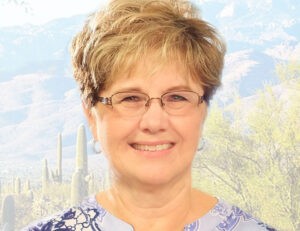
Cheryl’s expertise has provided assessments for dyslexia, direct services for reading, spelling, math, handwriting, and time-management difficulties. She has helped to coordinate IEP services through contracts with schools, provided teacher trainings, and instruction in time management and resilient living, and provided advocacy support in schools. Visit her website at: Southern Arizona Educational Services





Leave A Comment